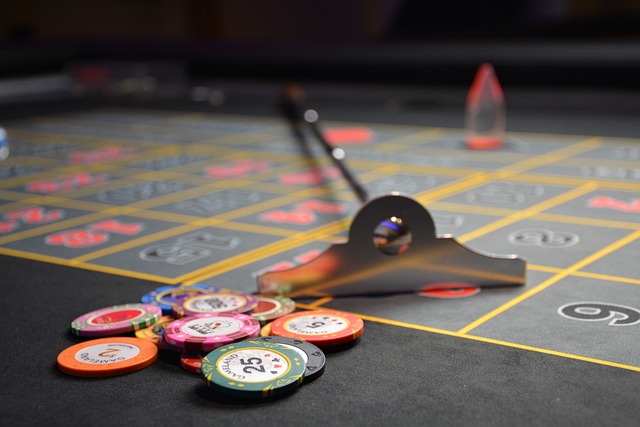
A Calibrated Descent Into the Casino Space
You do not enter a casino so much as dissolve into it. The transition is soft, almost imperceptible—an orchestration of lighting, acoustics, and spatial redirection that reconfigures sensory attention without overt command. The environment doesn’t greet you; it envelops you, exchanging orientation for immersion, intention for suggestion.
Sound becomes texture. Lights do not flash—they pulse, modulating in tempo to match the behavioral cadence of surrounding players. The floor guides your steps not by signage but by curvature, tactility, and the peripheral logic of visual contrast. You move without choosing to. You slow down without noticing.
The same subtle architecture is embedded within digital platforms like HellSpin, where interface replaces corridor, and gesture substitutes for spatial direction. Here too, the frame holds while movement appears free. The outcome is identical: uninterrupted motion within tightly bounded conditions.
Decision Loops Masquerading as Autonomy
You believe you are selecting your path. In truth, you are selecting from paths already primed. The illusion of autonomy is protected by the absence of resistance. Every choice you make feels organic, yet each option carries the same structural intent—to retain, to extend, to soften departure.
Visual elements are not decorative. They are directive. The absence of hard edges, the layering of soft illumination, the symmetry of arrangement—all contribute to a gentle narrowing of cognitive bandwidth. Decisions become patterned responses. You are not forced. You are absorbed.
Temporal Drift and the Dissolution of Context
Time within the casino is not simply obscured—it is disassembled. The absence of clocks is only the surface mechanism. The deeper manipulation lies in rhythm: the steady unfolding of micro-events, each tethered to the next through sensory continuity.
Without variance, moments lose contour. You do not mark progress through hours but through sequences—spin, pause, reveal, repeat. This form of time flattens judgment. Reflection becomes interruption. Momentum becomes default. The external world is not forgotten—it is rendered irrelevant by a more consistent internal loop.
The Physical Grammar of Engagement
Your body learns the environment before your mind questions it. Posture adjusts to screens and tables. Breathing synchronizes with animation cycles. Hand movements economize as repetition grows. You are not acting—you are rehearsing, without prior script.
This is not automation in the mechanical sense. It is learned fluidity, induced through repeated exposure and refined feedback. The player becomes both operator and object, guided not by rules but by rhythm. What was once strategy becomes ceremony.
Symbolic Rewards, Functional Retention
In this world, winning is reframed. A payout is not an endpoint—it is a pivot, a reason to continue. Losses, meanwhile, are not presented as failure but as near-success, inverted into motivators. The emotional palette is deliberately muted, calibrated to keep the affective range within manageable amplitude.
Progress is redefined: not in earnings, but in persistence. Staying in motion becomes the measure of achievement. The architecture does not promise escape. It offers containment that feels like control.
Departure Without Closure
Exits are never abrupt. They are deferred. Even the moment of leaving lacks finality. It feels like pausing a sequence, not ending one. You step out, but the internal rhythm lingers—a pattern seeking resolution that was never designed to arrive.
The experience does not conclude—it recedes. It is a soft residue, not a climax. There was no high. No crash. Only continuation, briefly interrupted.
And somewhere beneath conscious thought, the loop remains open.